Co-Founding TruFru | An Interview With Taz Murray
Updated: Aug 31
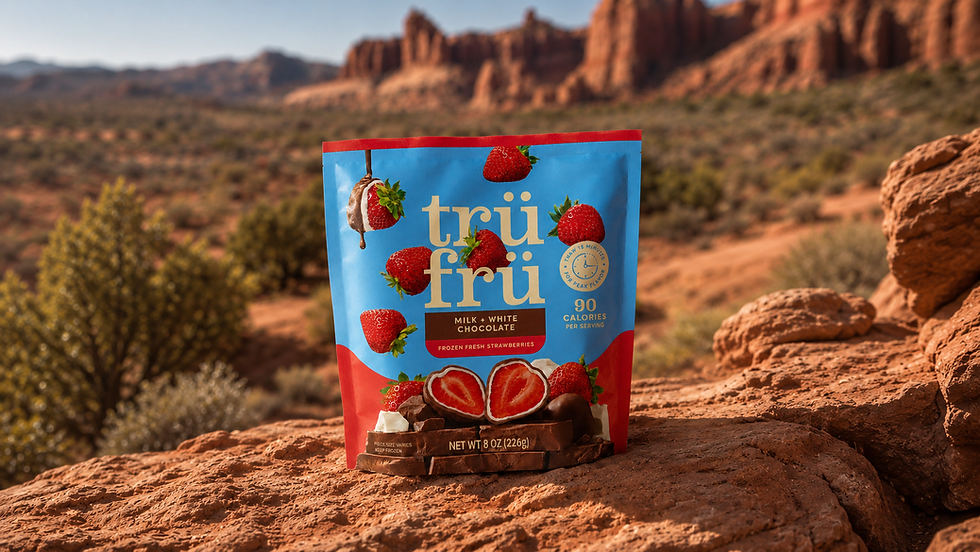
TruFru is a beloved snack brand now sold in every major retailer you can think of - Costco, Walmart, Walgreens, Maverik, and more. But there was a time when the only place TruFru had any shelf space was in the mind of Taz Murray. And his first attempt at creating the healthy, delicious treat he'd always dreamed of creating didn't get the reception he'd hoped for.

For over a decade, Taz Murray carried a desire to create something both healthy and indulgent. A delicious treat that truly let you enjoy the best of both worlds.
In the early 2000's, he attempted this with a brand called ChocoMed, which was a chocolate bar positioned as a health and wellness product. The goal was to support things like sleep, prenatal health, bone strength, and even anti-aging.
Making it actually taste good, though, was the hard part. And that struggle went on for years. ChocoMed never quite landed with customers, and it was, in Taz's own words, "a huge failure." But that failure didn’t kill the dream. He still wanted to create a product that was both healthy and delicious, but maybe the chocolate bar route just wasn't in the cards.
He'd already seen what was possible in the candy business, having bought Maxfield Candy in the early 1990's. In a relatively short span of time, he took the company from $6 million in annual revenue to $25 million. He later brought on a business partner, acquired KenCraft, and grew the company to $120 million in annual revenue, before a successful exit.
After the sale of the business, Taz decided to step back and relax for a bit. He got involved coaching sports, volunteering, and taking life a little slower.
But that off-season didn’t last too long.
Simply put, he felt there was something left in the tank. "[Co-founding TruFru] was more about this internal drive that said, 'I think there's more out there. I think I can do more than I've done,'" Taz told Desert Founders.
As many entrepreneurs experience, one or more successful ventures doesn't necessarily quench the entrepreneurial thirst for good. He wanted another shot at that product he'd always dreamed of. Even if, this time, he didn't necessarily need the financial upside that would come if it succeeded.
"I'd start by saying if you're doing it for money, you're doing it for the wrong reason," Taz told Desert Founders. "Money isn't a big enough reward. I think you'll find in life that the biggest rewards are more internal and fulfilling."
That approach to life and fulfillment can pull people out of retirement, and has many times. Take, for example, Walt Disney's older brother and lifelong business partner, Roy. When Walt passed away from cancer on December 15, 1966, the world wondered if his Florida project had died with him. Roy Disney was 73 years old at the time and had been planning to finally retire. But a week after his little brother's death, Roy gathered the staff for a meeting. Marvin Davis, a project designer for Disney at the time, recalled how Roy was barely even able to speak through the grief. He told the group, "We’re going to finish this park, and we’re going to do it just the way Walt wanted it. Don’t you ever forget." He abandoned his plans for retirement and focused on bringing his brother's final dream to life. Five years later, on October 25th, 1971, Walt Disney World was dedicated. Reporters asked him why he, a grandfather, would take on such a huge project so late in life, and he told them it was because he didn't want to have to see Walt in the next life and confess that he'd never tried. After the dedication, Roy flew home to California. He died two months later. When you're driven by creation and contribution instead of compensation, you can do more than you ever thought possible. An intrinsic motivation to create will always stir the soul more than the pull of money.
“Money doesn’t excite me, my ideas excite me.” - Walt Disney
The pull of an idea can certainly move a dreamer. And for Taz Murray, it was strong enough to call him back into scrappy startup mode.
How It Started
The concept that would eventually become TruFru - fruit covered in chocolate - wasn't entirely new. Major brands had experimented with it, but never hit the mark, in Taz's eyes.

Around 2012, Dole released a frozen banana product dipped in chocolate called Dole Dipper's, and on paper, the idea made sense. But in practice (and on the tastebuds) it was a miss.
Taz vividly remembers trying Dole Dippers years ago. With his experience as former CEO and President of multiple successful chocolate and candy companies, he recognized immediately that the main issue with the product was the chocolate they were using. It was low quality and just didn’t taste good. Taz knew there was room for someone to take this concept and execute it at a higher level.
But there was another reason why creating a product with real fruit in it mattered deeply. Over the years, he'd grown tired of “healthy” products that weren't actually healthy. Packaging and branding that appeared healthful, but nutrition labels that begged to differ.
“I don't mean any disrespect to any of the fruit snack people, but fruit snacks aren't fruit,” Taz told us. “Brookside Foods is a good example where they talk about chocolate covered fruit, and it isn’t fruit. It’s a jelly bean with chocolate on it. It might have a drop of fruit juice in it, there is some fruit aspect to it, but it isn’t fruit. Think about Skinny Pop. If you ever read the ingredients of Skinny Pop, it ain't skinny. But it's called Skinny Pop and people just automatically assume without reading the ingredients. I mean, people trust. And so I just got sort of tired of that deception that was going on.”
He wasn't going to deceive, and he wasn't going to disappoint. His product was going to have a legitimate health aspect and be irresistible. Something with real fruit in it. Hence the name, TruFru.
The Refining Process
Taz wanted to make it clear that he didn't come up with the idea on his own. In early whiteboard sessions, a business partner sparked the concept of freeze-dried fruit dipped in chocolate for a shelf-stable treat. Taz pushed hard for a frozen version, since he felt like the bite, burst, and melt aspect was a much more satisfying experience. They briefly toyed with the idea of starting two separate companies, one for freeze-dried and one for frozen. But they ultimately decided to start first with frozen and see what happened. So they got to work.

It’s no secret that they weren't the first to cover fruit in chocolate; they just wanted to be the best at it. Sometimes innovation is less about creating something entirely new, and more about improving or refining what's come before.
Their standard of real fruit also kept the brand honest. No healthful marketing spin was needed, since every bite had the evidence. They were building something they could stand behind.
“You’ve got to make a product you’re proud of,” Taz told us.
“If you can’t make a product you’re proud of, that you won’t eat yourself, that you won’t share with your friends, that you aren’t proud to bring to a party, then what the heck are you doing? Who are you trying to fool?”
They started experimenting with different fruit and chocolate pairings. They refined and perfected the product until the chocolate and fruit complemented each other perfectly. They even took early samples to Taz's alma mater, Brigham Young University in Provo, Utah, for taste testing. College students are particularly good at two things: eating free food and giving their opinions. The results from students and taste testers revealed that TruFru was "as enjoyable as fudge." And with BYU being somewhat famous for its fudge, that was saying a lot.
Loving the Product Without Blinding Yourself
“You need to love your product,” he told Desert Founders, “but you better be realistic about it. Just because you love it doesn’t mean everybody else will.” Entrepreneurs sometimes assume that their preference reflects the opinion of the market. Not just in snack startups, but across all industries. The "if I like it, they'll like it" mentality creeps in. People experience the same product in different ways, so it's important to actually talk to them before going to market.
Actively and honestly seeking feedback from your customers is the single best thing entrepreneurs can do before launching. How else will you know what people want? The TruFru team spoke with customers to make sure they'd actually love it if they saw it in stores one day. This was all done before a single bag of TruFru was even produced. "The goal of a startup," according to Eric Ries, author of The Lean Startup, "is to figure out the right thing to build — the thing customers want and will pay for — as quickly as possible." In the early days, outside opinions weren't treated as threats, but as crucial data the team needed if they were going to build their best product. If entrepreneurs are serious about creating something their customers love, then the more feedback the better.
The Costco Meeting
Most people take samples from Costco, but Taz and the team were given an opportunity to flip the script. They brought samples of their newly refined snack to a meeting with the manager of their local Costco, and were hoping the positive feedback would continue.
The manager took a bite, paused, and didn't need much more convincing. The meeting lasted a total of eighteen minutes, and TruFru walked out with a purchase order from one of the largest and most beloved retailers in the country. Costco was their very first customer.

There was just one problem. At that point, they hadn’t yet produced a single bag of TruFru. They literally hadn't gone to production yet, but Costco wanted the order delivered before the upcoming holiday. And from the day production began, demand for TruFru has exceeded what they could supply, and in many ways, they’ve never fully caught up. That is product validation. When customers are busting down the door and begging you for more, you know you've listened to them pretty well.

On Solving Problems
Starting and growing a successful company doesn't mean you'll never have problems again. Entrepreneurship (and life, for that matter) is a constant solving of problems. “You’re going to have problems,” Taz told Desert Founders. “And the sooner you figure out that your job as an owner is to solve them, you’re going to have a much better life. If you’re always complaining about the problems you've got to solve and saying your life is so tough, it's going to be a long life and your work's going to be tough.”
“Embrace the fact that you are there to solve problems… because if you're not solving a problem, you're not moving forward.”
Many people spend their lives running from problems or trying to free themselves from the slew of potential negative things that could happen to them. However successful they may be, these individuals spend their lives running from things and are motivated by fear.

Others take a different approach to life. Instead of trying to be free from having to solve hard problems, they see themselves as free to solve them. They tackle issues head-on and solve them with energy and purpose. This approach makes the most sense for entrepreneurs at any stage.
Think of two different entrepreneurs building similar companies.
The first loves what they do every day and has created a product or service they're genuinely excited about and proud of. They’re excited to improve both themselves and what they offer so they can better serve their customers.
The second is constantly worried. They're so nervous that everything will come toppling down one day. They work out of a sense of desperation because they fear what the future might hold if they don't work longer and harder. They don't see their customers as much more than the source of their next paycheck.
Who do you think will build the better company? And who do you think is enjoying entrepreneurship the most?
His Favorite Part
Throughout the journey, there were plenty of moments that could've qualified as the most memorable. From broke college students at his alma mater loving the samples, to Costco being their very first customer, it was quite the entrepreneurial fairy tale. But there was one thing Taz told us gave him more satisfaction than anything else.
While growing the company, he made it a point to read all of the customer feedback. He would literally reach out to people who had sent in complaints. He was open and grateful when customers shared ideas, even if he knew they wouldn't be implemented. He loved the feedback and continued to welcome it. (A worthwhile habit for entrepreneurs to develop.)
Of all the things that could've been the highlight of the journey, the comments and stories from people enjoying his product took the cake. One woman who wrote in to thank the company, sharing how TruFru got her through a rough postpartum experience. Another told the story of how a neighbor brought over TruFru as a gift, and it unexpectedly brightened their day. “I get more satisfaction out of that,” he said. “The fun part is that we provided something that elevated their lives.”
“The fun part is that we provided something that elevated their lives.”
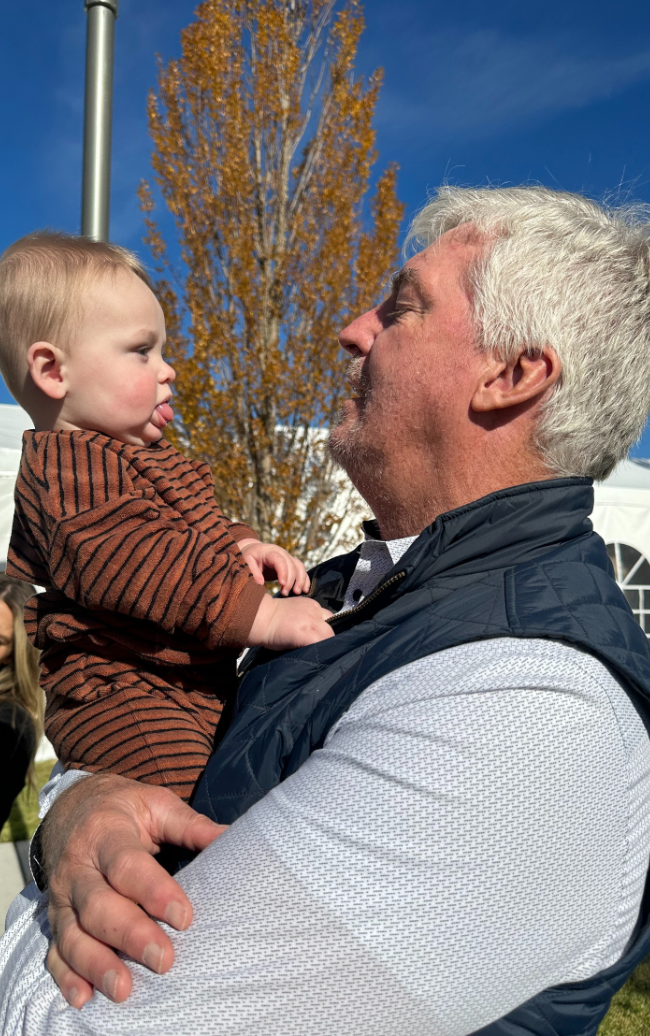
He spoke the same way about the people he worked with. He never subscribed to the notion that an employee's responsibility was to remain loyal to a company and never leave. If an employee found a better opportunity for their family with another organization, he celebrated it with them. He was genuinely happy for them, and he hoped that their time at TruFru had lifted them in some way. The way he saw it, his job was to make their lives better while he had the opportunity to do so and to give them a wonderful place to come to work every day. He viewed his employees and team members much like he viewed his customers, with the end goal of both serving and lifting them.
When success comes, it has the potential to deepen one's ability to care for others. Eventually, we realize that it's not just customers whose day we can brighten, but anyone we come in contact with. Our ability to create meaningful experiences can extend beyond entrepreneurship. We can learn to bring joy to our neighbors, communities, churches, schools, and more. Success that only enriches the individual creates a lifestyle, but leveraging that success to bless the lives of others creates a legacy. In the end, maybe building something of value solves more than the initial problem. Done right, entrepreneurship can change lives.
Kurt Workman, founder of Owlet Baby Care, put it best:
"Entrepreneurship done wrong feels like sales. Entrepreneurship done right feels like service."
Maybe it’s time to start measuring success not only by what was built or how far it spread, but by the lives that were changed, the people who were cared for, and the impact made along the way.

Comments