Keep Getting Up: The Story of Chris Studdert, Co-Founder of Blue Coolers
Updated: Apr 30
Some lessons are best learned from someone who’s lived them. In our conversation with Chris Studdert, he shared what he’s learned about rebuilding from zero when the ground shifts, keeping a marriage strong through tough times, and staying groundef no matter what the life throws your way. If you’re building something, his story has something for you.

There is a version of the entrepreneurial story that gets told at conferences and as keynote addresses that sounds pretty great. It usually involves a college dropout or a smart person in a boring job. They have a big idea, build something, hit a roadblock, then find massive success and live happily ever after.
And then there's a more relatable version.
Meet Chris Studdert, Co-founder of Blue Coolers.
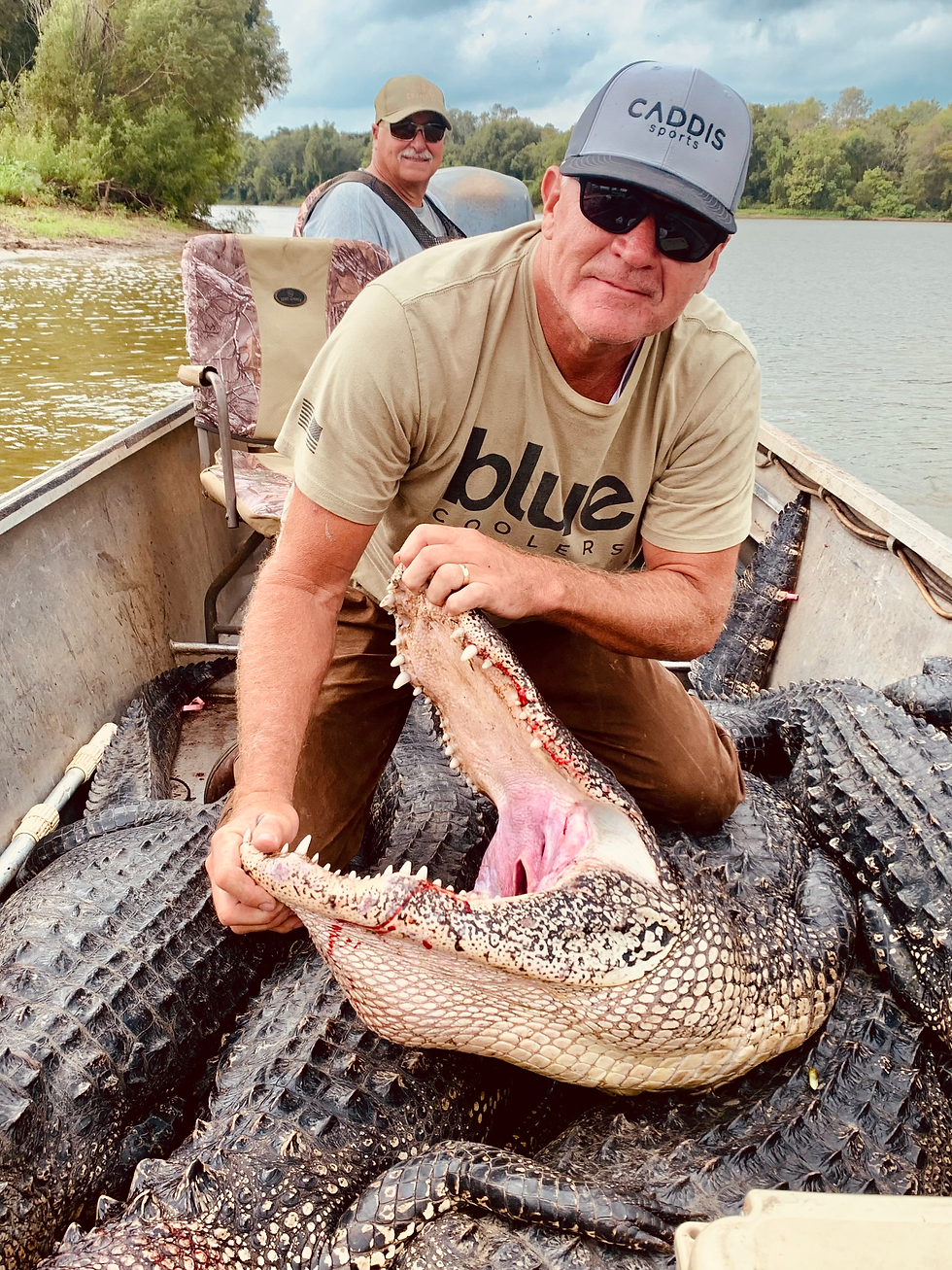
Today Chris lives in beautiful Southern Utah and is the owner of two successful outdoors companies, Blue Coolers and Caddis Sports. But his version of the entrepreneurial journey involves large scale failures, lawsuits, gut checks, pulled funding without warning, companies being destroyed overnight due to another's actions, and multiple “What are we doing to do now?” type moments.
One of those moments came when a shipping container full of a newly designed cooler side project sold out faster than expected.
The Blue Coolers Story
Chris Studdert has always worked for himself. His business partner Marcus had always worked in corporate. One day, somewhere in the overlap of those two orientations toward the world, the two friends decided they wanted to create a product of their own. So they started a backpack company.
Around the same time, however, Coolers were having a moment. Yeti had turned a functional outdoor item into a status symbol and a five-hundred-dollar purchase decision. Chris, a father of six, had a clear-eyed reaction to that price point.
Chris remembers saying to Marcus, “I’ve got six kids, you’ve got four… I can’t afford that. And I know I can do as good or better for half of that.”
“So,” he told Desert Founders, “we said, Hey, let’s go design a cooler.”
So Chris called a few of his factory contacts to get the ball rolling. He and Marcus designed the cooler, ordered a container full of them, and sold every last one.
Quickly.
“We’re like, oh,” Chris told us. “Now what do we do?”
That question (equal parts excitement and terror) is one that Chris Studdert has been answering, in one form or another, his entire adult life. The answers haven’t always been easy to find, but they’ve always come down to the same two words: move forward.
They ordered another container of coolers. Same result. And right around that time, a production crew for a Discovery Channel show called I Quit reached out. The show followed people who left full-time jobs to build their own businesses, and they wanted to know if Chris and Marcus would be interested in being documented. If it felt like a good fit, the crew would spend eight days a month for an entire year following them as they went all in on Blue Coolers.
Shortly after their interview with Discovery, the answer came back: the show wanted them.
So they went all in.

The Thing About Going "All In"
Before the coolers and the TV show, Chris had already learned something about entrepreneurship that doesn’t show up in the curriculum of most business programs.
When you go all in, you are never gambling alone.
“My advice is, you have to have a spouse that thinks the same way,” Chris told Desert Founders. “Because if they don’t, it won’t work. You gamble this” — he motioned toward a young family in the room — “that’s what you do when you go all in. You really do. If you think you’re only gambling your own stuff, you’re not. You’re risking the whole crew.”
His wife, Abby, has been his greatest partner in every meaningful sense of the word.
“We’re okay with failure,” Chris said. “And if you’re not both okay with failure, I tell you: don’t do it. You’ll get divorced, then you’ll hate each other, and that’s not worth it.”
The Bet in Montana That Cost Everything
To understand the depth of this journey, you need to understand what happened in Montana.
He was thirty-one years old, traveling back and forth to help his dad build some condos, when they met an older gentleman at church one Sunday in Montana who wanted to sell his guest ranch. This ranch had access to thousands of acres and, with some renovations, visitors could experience ranch life, go on guided hunts, and live a cowboy lifestyle for a few days . Chris and his dad liked the idea and eventually worked out a seller-finance deal to buy the property. Chris moved his family from a tech job in Utah to a property in the middle of nowhere, twenty-five miles from pavement, in a town of nine people.
Nine people.
“Our sole source of heat was what we cut down in the woods,” Chris told Desert Founders.
They spent a year refurbishing cabins, building relationships with banks, and crafting a truly immersive experience for their visitors. They started doing the guided hunting trips and got really good at it. Good enough that Cabela’s, then one of the rising forces in the outdoor sporting world, found them at a trade show and made them an offer: don’t book any other hunts next year. We’ll take them all. It was the kind of partnership that could sustain their families for years. With seventy-five horses and now multiple guides, they had built a real business in a remarkable place.
And then, through circumstances nobody had anticipated, the arrangement that made it all possible began to unravel. The original contract required the seller to maintain certain federal licenses. These permits granted access to the roughly 75,000 acres of surrounding land. Without those permits, the ranch’s primary offering and purpose disappeared.
The seller’s mental health started to decline quickly. Paranoia and other mental illness led to severe trust issues, and he refused to keep his end of the contract and renew the permits. Chris and his dad were force to take legal action.
The old man was ordered to sign the documents by a judge. Ultimately, he refused to sign and let the permits expire. Chris called the government to explain the situation. Their response was unsympathetic: “We don’t care. He didn’t sign them. Your permits are gone.”
Chris and his dad had invested close to a million dollars into the property, the horses, the guides, the infrastructure. They had a partnership with Cabela’s lined up for the next season. And in a matter of weeks, it was all gone. And there was nothing they could do about it.
So they stripped what they could and walked away. Chris moved his family into a cousin’s basement back in Utah. He had five children, no home, and no income.
“That was one of the lowest points,” Chris told Desert Founders. “Being the provider of my family, but so low and struggling.”
He called a college roommate who was an attorney and explained the situation. They had to take legal action against the old man for what he’d caused. The lawsuit would take three years to resolve, and they eventually recovered their investment, but it was a painful, gut wrenching process.
“It was mega painful,” he reflected. “That was three years of debt chasing me.”
Getting Back Up
Still needing an income, Chris’s father connected him with some contacts in California. After the introduction, Chris committed to earning a healthcare administration license — a credential that typically requires about two years of study. He did it in six months.
While studying during the week, he started a concrete coatings company on the side to make ends meet. On weekends, he applied the coatings. His wife, Abby, literally went door to door selling their services.
After six months, he passed the test and went to work running healthcare facilities. The company eventually relocated him and his family to the Bay Area. Life had stabled out, but Chris didn’t love the environment his kids were growing up in.
Then, after one particularly strong year managing his facility, a corporate evaluator flew out to assess his performance. The building Chris managed had brought in over a million dollars in revenue despite being under construction all year. By any honest measure, it was a remarkable performance under difficult circumstances.
The evaluator didn’t see it that way. He spent the entire meeting tearing into Chris, pointing out everything he hadn’t done, everything he’d done wrong, everything that fell short of expectations. No acknowledgment of what he’d actually accomplished. Just criticism and an unfair evaluation that left Chris missing the feeling of being his own boss.
Chris went home that night and told his wife he was done working for someone else.
He couldn’t fathom that someone could treat another human being that way. It was a reminder that he was simply not built for someone else to hold the ceiling above his head. Some people are wired that way and thrive in it. Some aren’t.
The evaluator’s superior called and pleaded with Chris to stay, apologizing for the experience. But for Chris, his family’s California chapter had come to an end.
At this point, the lawsuit from the ranch had been resolved, and they were in a good position financially to make a choice about where they wanted to raise their family. So they moved back to Utah, where Chris tried his hand at starting his own thing again.
He and his brother started a tech company that grew to forty employees before an investor pulled funding without warning. Another swing and a miss.
Eventually, Chris founded a promotional products company. It was while running that business that his little brother introduced him to Marcus, his future co-founder.
Shortly thereafter, the idea for Blue Coolers was born.
The Foundation Underneath All of It
Chris is open about his faith and how it carried him through his hardest seasons. “Being a member of The Church of Jesus Christ of Latter-day Saints, I have an innate knowledge and acceptance that I’m divine,” he told Desert Founders. “And nothing defines that. Success doesn’t define that. My failures don’t define that. That’s in me.”
He serves voluntarily in a leadership role in his congregation, where he speaks to young adults regularly. He reminds them of this concept: don’t let the noise of the world tell you who you are. The comparisons, the metrics, the polished social media posts, the fancy cars, name brands, status symbols. They’re just things. None of them define who you are.
What He'd Tell His Grandkids
When asked what he’d tell his grandchildren if they found themselves struggling in their own business someday, Chris was clear.
“Work hard. Maybe that’s working hard for somebody else. Maybe that’s working hard for yourself… Don’t fall for the glamour of ‘I’m an entrepreneur,’ because entrepreneurship is great, but remember: sometimes you have paychecks and sometimes you don’t. Sometimes you have to pay everybody else and you don’t pay yourself. You have to be okay with that.”

He paused, then added: “But inherent in that same thing is, I’m the master of my own destiny. Nobody else is going to take my retirement away. I will make it or I’ll lose it. All based on my merits. And I like that.”
Today, Chris owns two thriving companies, but the companies aren’t the point. The point is that he got there by refusing to let setbacks be the end of the story.

The ranch is gone. The tech company didn’t make it. There were seasons where the income stopped and the future felt impossible to see.
But Chris is still here. Still building. Still married to the same woman who went door to door selling their side gig when they had nothing else. Still grounded in his faith in God.
None of that happened by chance. It was always a choice. A choice to show up, to move forward, to love, to believe, and to keep going.
Keep going.



Comments